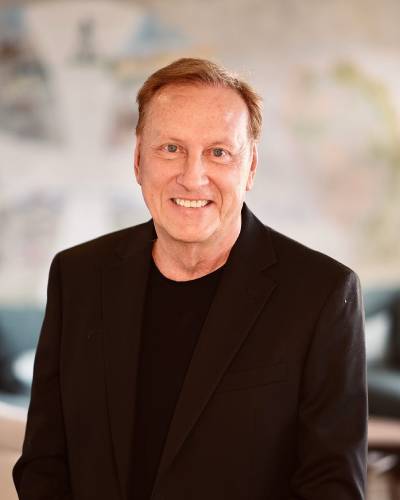
Tomas Björkman
Director · Emerge Institute
Everyone is in the work.
The Institute is not built around a single curriculum or a fixed doctrine. It is built around people who are themselves deeply engaged in the questions it exists to pursue – as thinkers, practitioners, teachers and fellow inquirers.
What matters here is not a rigid distinction between teacher and student, but a shared commitment to learning and development. Some bring decades of experience, others are earlier in their journey, but all remain students of the questions themselves.
No one stands outside the work.
Director · Emerge Institute
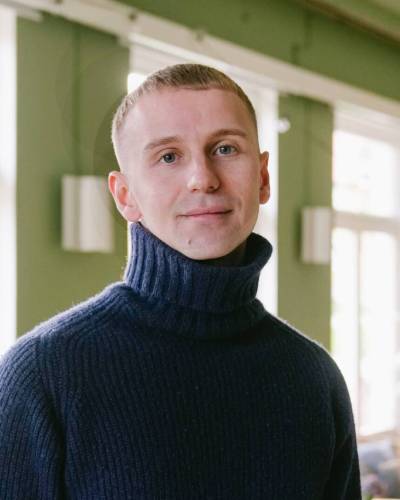
Programme Manager · Emerge Institute
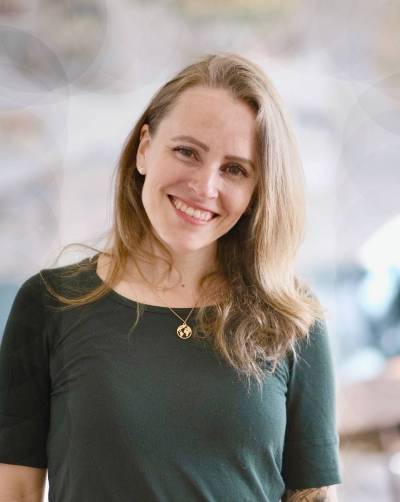
Retreat Coordinator and Facilitator, Ekskäret Island
Fellows are the intellectual and pedagogical core of the Institute – people whose thinking, practice and embodied orientation the Institute stands behind, and who bring distinct angles of approach to the shared work of formation. All fellows participate in the Council of Fellows, which from 2028 will hold ultimate governance of the Institute: its intellectual direction, its standards of integrity, and its fidelity to the work it exists to do.
Fellow
Fellow
Fellow
Fellow · Technologist & facilitator

Fellow
Fellow
Fellow

Fellow
Fellow
Fellow
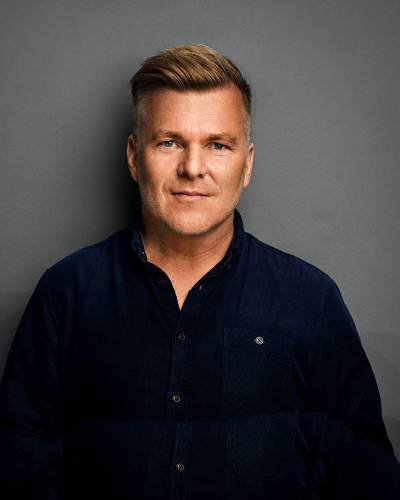
Tomas Björkman
Director · Emerge Institute
Tomas Björkman is a Swedish author, applied philosopher and social entrepreneur whose work has moved across three decades from financial markets to the foundations of civilisational change. He founded the Ekskäret Foundation, co-founded Perspectiva, the Inner Development Goals framework, and initiated the Emerge network in 2018 – eight years of field-building that the Institute now carries into its next form. His three books – The Market Myth, The Nordic Secret (with Lene Rachel Andersen), and The World We Create – trace a single arc: from the social construction of economic reality, through the developmental infrastructure that allowed Nordic societies to flourish, to the question of what kind of inner and cultural transformation the present civilisational threshold requires.
Tomas is a member of the Club of Rome and a fellow of the Royal Swedish Academy of Engineering Science. He divides his time between London, Stockholm and Berlin.
Nicolai Rehn
Programme Manager · Emerge Institute
Nicolai Rehn keeps the Institute running – managing programmes, communications and operations as the Institute moves from formation into its first active season. He holds a Master's in Business Administration and Philosophy from Copenhagen Business School, where his thesis explored the ontological design of governance in network states. He has built and led organisations across Denmark and Germany, coordinated field-level research in the wisdom infrastructure sector, and completed training in integral coaching and participatory leadership. He brings to the role both the operational range to hold a young institution together and the intellectual formation to contribute to its development. He lives at Emerge Lakefront.
Pamela von Sabljar
Fellow · Council of Fellows
Pamela von Sabljar is a facilitator, speaker, and author working at the intersection of leadership, personal development, and emergent group process. She supports leaders and organisations in cultivating deeper connection, generative dialogue, and embodied sense-making, drawing on over 25 years of experience in leadership, behavioural science, and organisational development.
Pamela has led global trainings and masterclasses, including Emergent Dialogue and Facilitate the Shift, and works with diverse initiatives to foster clarity, presence, and creative collaboration. Her approach emphasises attunement to the living intelligence between people and the conditions that enable genuine emergence and movement in collective work.
Ivo Juriaan Mensch
Fellow · Council of Fellows
Ivo Juriaan Mensch is a philosopher, contemplative practitioner and course designer whose work sits at the intersection of spiritual innovation, cultural transition and the inner dimensions of civilisational change. At Perspectiva, where he leads the Praxis strand, he designs practices and courses to help people navigate what he calls the unlearning of modernity – the slow, demanding work of releasing assumptions so fundamental they rarely surface as assumptions at all. His research centres on time, imagination and logos as foundational dimensions of transformation rather than peripheral concerns. He is an ordained monk in the Soto Zen Buddhist lineage and has practised for over a decade in the Diamond Approach wisdom school – a combination that gives his work an unusual quality: serious philosophical rigour held within genuine contemplative depth. Originally from the Netherlands and now based at Emerge Lakefront, Stockholm, he brings to the Institute a rare integration of intellectual formation, spiritual practice and the practical knowledge of what it takes to design containers in which genuine inner work can occur.
Erik Fernholm
Fellow · Council of Fellows
Erik Fernholm is a social entrepreneur and cognitive neuroscientist whose work has centred for fifteen years on a single question: how do the inner capacities that make wise action possible actually develop – and how do we make that development available at scale? As co-initiator of the Inner Development Goals and co-founder of the 29k Foundation and Aware platform, he has built some of the most significant infrastructure in this field for bringing inner development out of specialist settings and into the lives of ordinary people. He brings to the Institute both the scientific grounding – in cognitive neuroscience and happiness research – and the practical track record to make the claim that developmental depth is not an elite pursuit but a civilisational resource. His work is animated by a longstanding conviction, rooted in personal experience as much as research, that the values by which modern societies measure success are themselves part of what needs to change.
Phoebe Tickell
Fellow · Council of Fellows
Phoebe Tickell is a biologist, systems thinker and social entrepreneur whose work has centred for fifteen years on a question the Institute takes seriously: what would it actually mean to expand what human beings are capable of imagining as possible – not as a creative exercise, but as a civilisational necessity? Through Moral Imaginations, the organisation she founded, she has developed the framework of Imagination Activism: the proposition that imagination is a muscle that atrophies without practice, that modern institutions have systematically narrowed it, and that recovering and expanding it is among the most consequential forms of work available in this moment. Trained in biological natural sciences at Cambridge, she brings to the Institute a grounding in how living systems actually organise – in networks, in feedback, in emergence – and an insistence that the tools we use to understand nature should inform how we understand transformation in human systems too. An Executive Fellow at Harvard Business School and a Visiting Research Fellow at the University of Reading, she has worked across governance, education, food systems and civic life, always at the point where complexity thinking meets the practical question of how people and communities can begin to act from a wider sense of what is possible. Her essay Moral Imaginations, written at the Berlin 2021 gathering, remains one of the most widely shared texts to come out of the Emerge network.
Stephen Reid
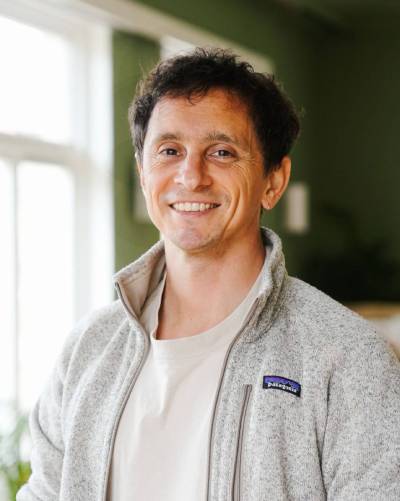
Fellow – technologist, facilitator and coach
Stephen Reid is a technologist, facilitator and coach who has trained in the fields of AI/ML, complexity science, physics, transformative coaching and insight meditation. Current projects include leading the development of Dandelion as a founder of not-for-profit worker co-op Symbiota, hosting courses and residencies as a founder of Futurecraft, and writing a book on Technological Metamodernism.
Previously, he founded The Psychedelic Society, which established the first legal psilocybin retreat programme in Europe. Stephen has an MPhys in Physics from the University of Oxford, where he specialised in quantum field theory, an MRes in Complexity Science from the University of Bristol, and a Professional Certificate in Machine Learning and Artificial Intelligence from UC Berkeley.
He lives with his wife Laura and daughter Runa in Stockholm, Sweden, where he enjoys swimrunning in the archipelago.
Jan Artem Henriksson
Fellow · Council of Fellows
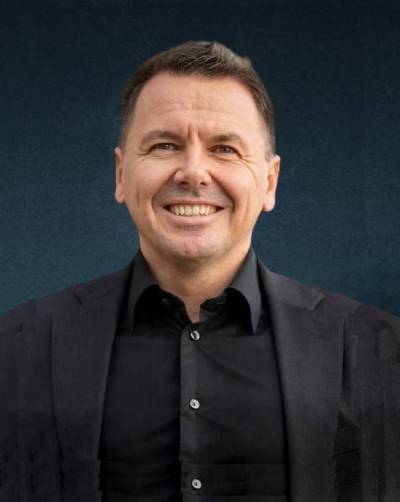
Jan Artem Henriksson is an independent executive advisor and keynote speaker working with organizations and governments on leadership development, cultural change, and systemic transformation.
He co-initiated the Inner Development Goals (IDG) Foundation and served as its Executive Director from 2020 to 2026, building it into a global movement. He remains an IDG board member and continues to advise the wider ecosystem, including the IDG Business Coalition.
Since 2023 he has been a Senior Fellow at the Human Flourishing Network at Harvard University, where he works on connecting human flourishing research with leadership and organizational practice. He also serves as an external advisor to fast growing companies like Lovable, an AI-native product company, on people and organizational development.
Jan's work draws on a deep grounding in developmental psychology, attachment theory, and organizational research, combined with practical experience as an organizational leader and entrepreneur, having co-founded two companies before IDG. He is currently training as a psychotherapist in integrative approaches and has a fifteen-year long meditation practice.
Born in Ukraine and based in Stockholm, he consults and speaks internationally on what the AI era means for human development and how to create healthy systems that help people thrive in times of complexity and change.
Fredrik Livheim
Fellow
Fredrik Livheim is a licensed clinical psychologist and researcher at the Karolinska Institutet in Stockholm, where his work focuses on Acceptance and Commitment Therapy – one of the most rigorously evidenced approaches to the kind of psychological flexibility that inner development work points toward but rarely grounds in clinical science. He has trained more than two thousand group leaders in ACT-based methods for stress, resilience and mental health, and is a key figure in the Aware by 29k foundation, which develops free digital tools for mental health and personal growth at scale. He brings to the Institute something the field consistently needs and rarely has: serious empirical grounding for the inner capacities the work names, and practical experience of making those capacities genuinely available beyond specialist settings.
Helen Tsim
Fellow · Council of Fellows
Helen Tsim is a social entrepreneur, educator and institutional designer whose work centres on a question the Institute takes seriously from a different angle than most: how do environments actually shape the conditions under which human beings develop trust, take responsibility, and act with integrity under pressure? Trained in social psychology at Harvard – where she studied the relational and identity-based conditions that allow groups to function under complexity – and with experience teaching entrepreneurship and leadership at Stanford, she brings to the Institute an empirical rigour that grounds the developmental claims the field often makes in ways that are harder to dismiss. Her work across early-stage organisations, community learning initiatives and non-profit educational projects in the United States and Europe has been consistently oriented toward the same practical question: how do you design environments in which people become capable of acting with greater clarity, cooperation and societal responsibility? That is, in essence, the Institute's question too.
Jamie Bristow
Fellow · Council of Fellows
Jamie Bristow is a writer and policy adviser whose work has centred on a question most institutions prefer to avoid: what happens when the inner dimensions of human experience are taken seriously as a matter of public concern rather than private preference? As founding Director of the Mindfulness Initiative and clerk to the UK's All-Party Parliamentary Group on Mindfulness from 2015 to 2023, he worked directly with legislators across multiple countries to bring contemplative practice into the policy arena – not as a wellness amenity but as a condition for healthier collective judgement. His reports for the Club of Rome and others on the inner dimensions of sustainability and systems transformation have become reference points for the growing field that sits between contemplative practice and civilisational change. He brings to the Institute a rare combination: genuine practice depth as a committed Insight Meditation practitioner training to teach, and hard-won knowledge of what it actually takes to translate that depth into the institutional and political structures that shape collective life. His background spans psychology, climate campaigning and advertising – a range that gives his work an unusually grounded sense of how inner development does and doesn't travel across different registers of public life.
Anne Caspari
Fellow · Council of Fellows
Anne Caspari is an organisational ecologist and facilitator whose work sits at the intersection of complexity science, adult development and the practical question of how human systems actually change – as distinct from how change management theory says they should. Trained in ecology before turning to organisations, she brings to the Institute a grounding that is unusual in this field: a rigorous, empirically tested understanding of how complex adaptive systems behave, and what consistently gets in the way of their self-organising capacity when human beings are added to the equation. Her three essays for the Cohere+ project – on the phenomenology of group coherence, the traps that prevent it from forming even among skilled practitioners, and the challenge of translating collective transformation beyond the contained group – remain among the most intellectually precise contributions the Emerge field has produced. She works from Germany and is one of five people worldwide certified to deliver the Cynefin Base Camp courses, which gives her work an unusual combination of philosophical depth and methodological rigour. Her central conviction, earned through decades of practice, is that genuine transformation cannot be imposed or engineered from outside – it must be nudged from within, by someone who understands both the depth of human resistance to change and the conditions under which that resistance can become visible enough to work with.
Jonna Lundberg
Retreat Coordinator and Facilitator, Ekskäret Island
Jonna Lundberg coordinates retreats and facilitation at Ekskäret Island, bringing to the role both practical operational experience and direct knowledge of the Institute's work from the inside. She has lived as a resident at Emerge Lakefront and worked as a project manager at the Inner Development Goals initiative, and now works for the Ekskäret Foundation. That combination – having inhabited the community, understood the framework, and managed complex collaborative projects – gives her an unusually integrated understanding of what the island's retreat programmes are trying to do and what it takes to hold the conditions for them well.